My wife Karen and I have spent countless happy hours exploring the North Okanagan. We have hiked and cycled the many trails surrounding Vernon and Coldstream and kayaked the three lakes that surround these communities. I have also ventured on motorcycle into the high country surrounding Vernon. I always carry a camera to capture fleeting moments of exceptional beauty that appear when the landscape sparkles below amazing skies.
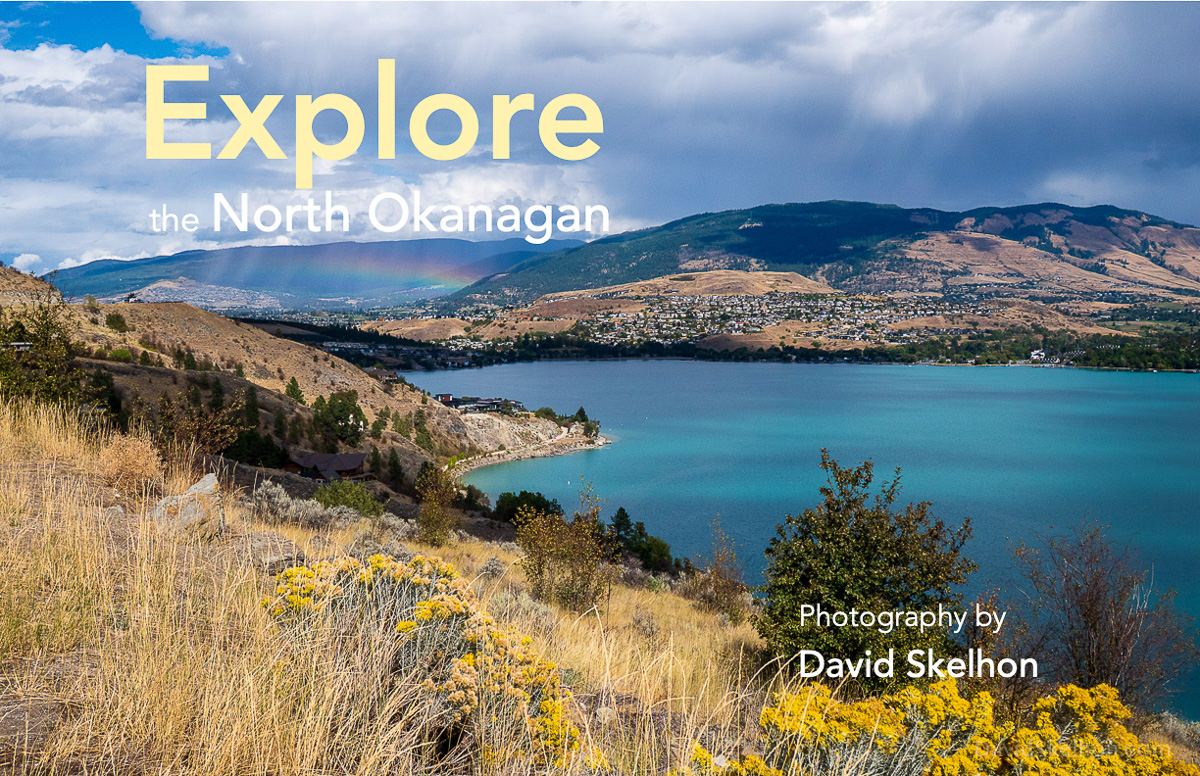
Following the success of my first book, Seasons in the North Okanagan, we put together a new volume in the same compact format, titled Explore the North Okanagan. We combined two years of my photography with Karen’s words describing what this amazing area – including the City of Vernon itself – has to offer. Think of it as a “time capsule” that captures life in and around Vernon from 2023 – 2025.
The book contains around sixty photographs in colour and black and white, showcasing the area, in a compact 21×15.5 cm (8.25 x 5.25 inches) format that can be easily mailed to distant family and friends.
Explore the North Okanagan is available for around $20 at the Rail Trail Cafe next to Kal Beach in Coldstream, and Good Gracious Contemporary Gifts at 3209-30th Avenue in the Vernon downtown. And from 1st. May 2026, available at Davison Orchards, 3111 Davison Road, Vernon.
I make regular posts of new photography on Instagram: @davidskelhon
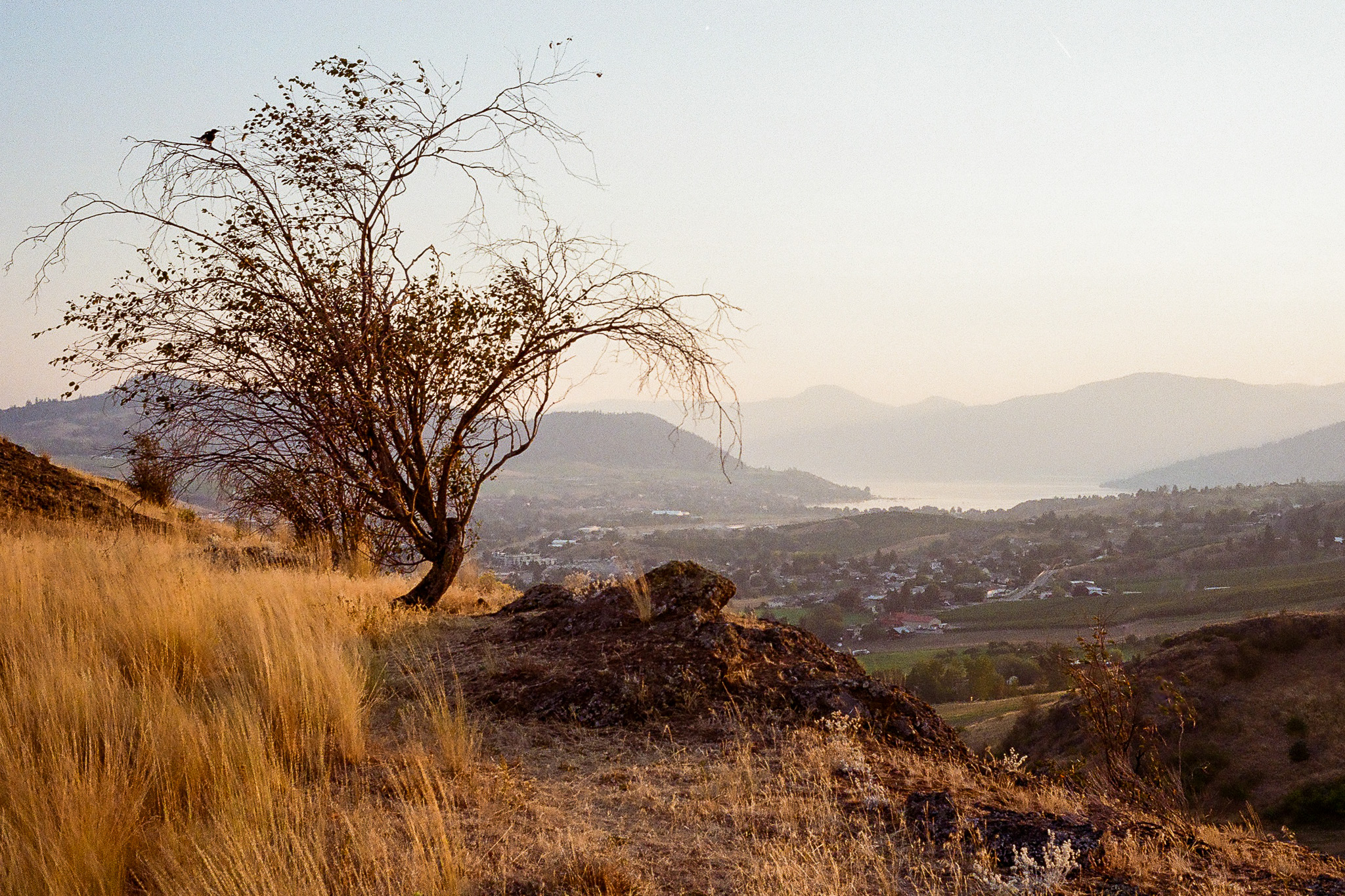
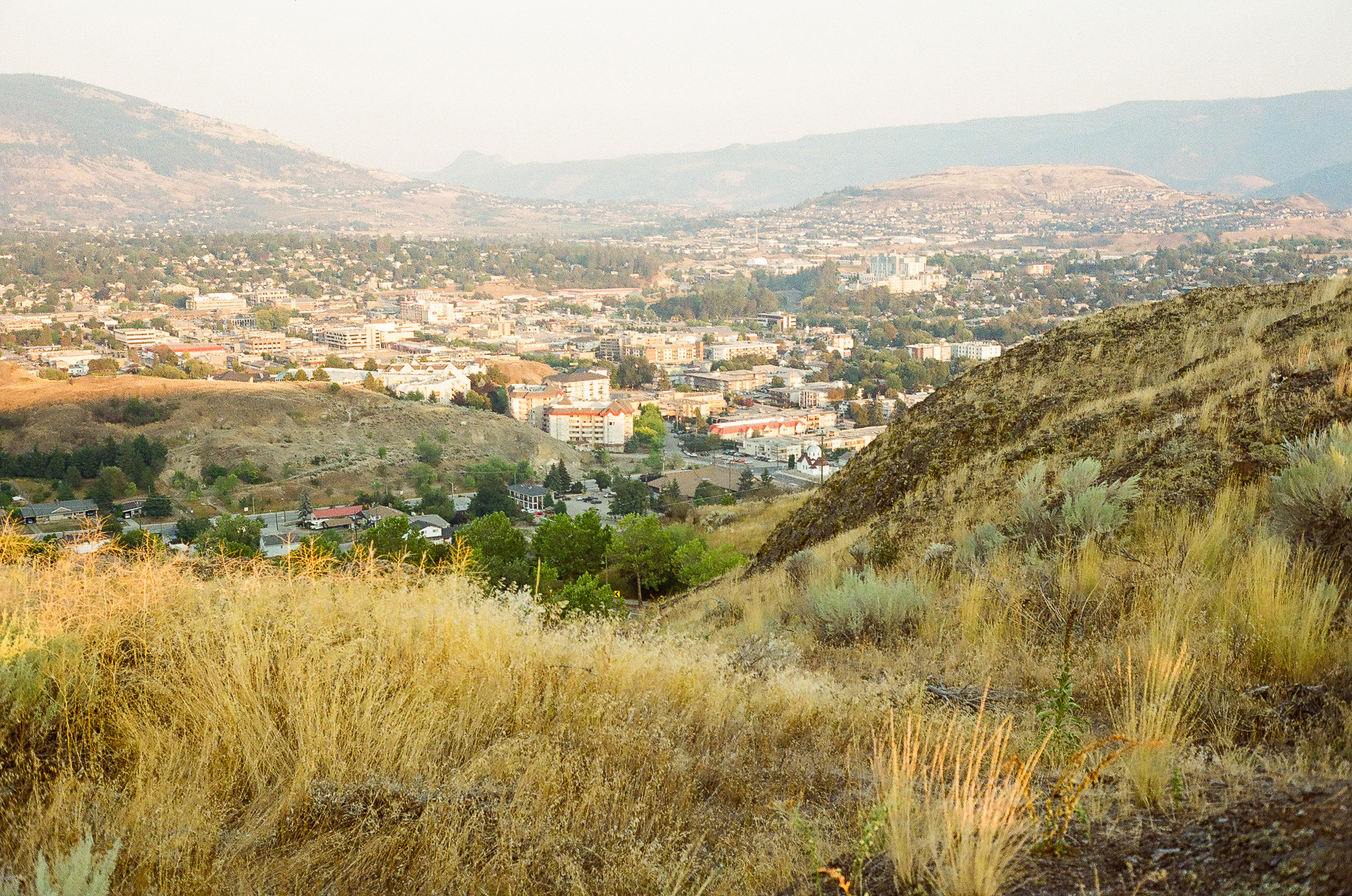
Last summer I put a roll of Kodak Gold 200 into a Konica S3 – a popular, quality 35mm camera from the ‘70s. It’s a rangefinder so focusing is done manually and after setting the shutter speed the camera automatically selects the aperture.
It’s small and light and is renowned for its 38mm f1.8 Hexagon lens which can create stunning images. I took it with me from time to time, taking the odd shot when something caught my eye. Honestly, when I made the 36th exposure last month I had forgotten what I had taken months earlier.
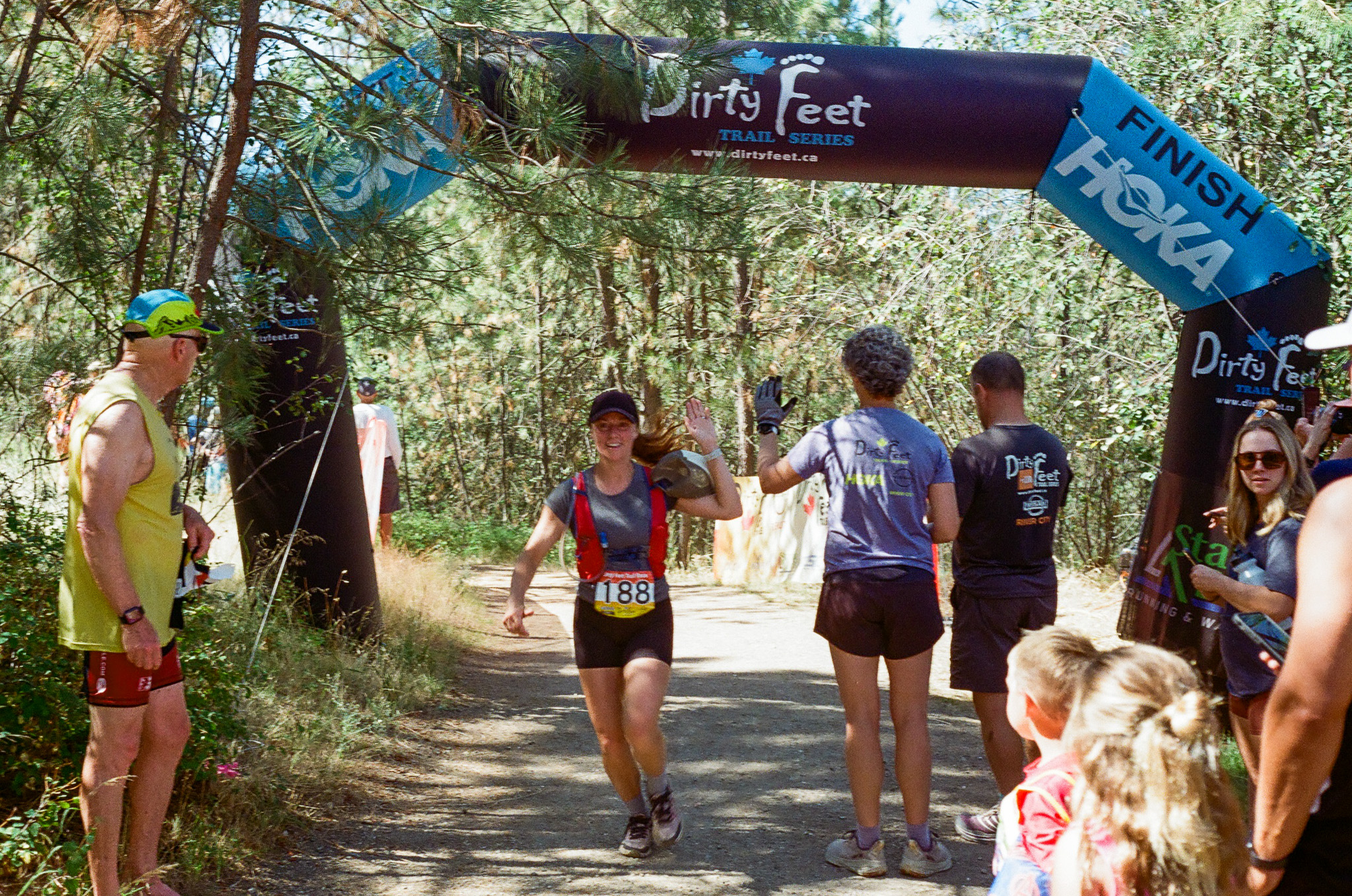
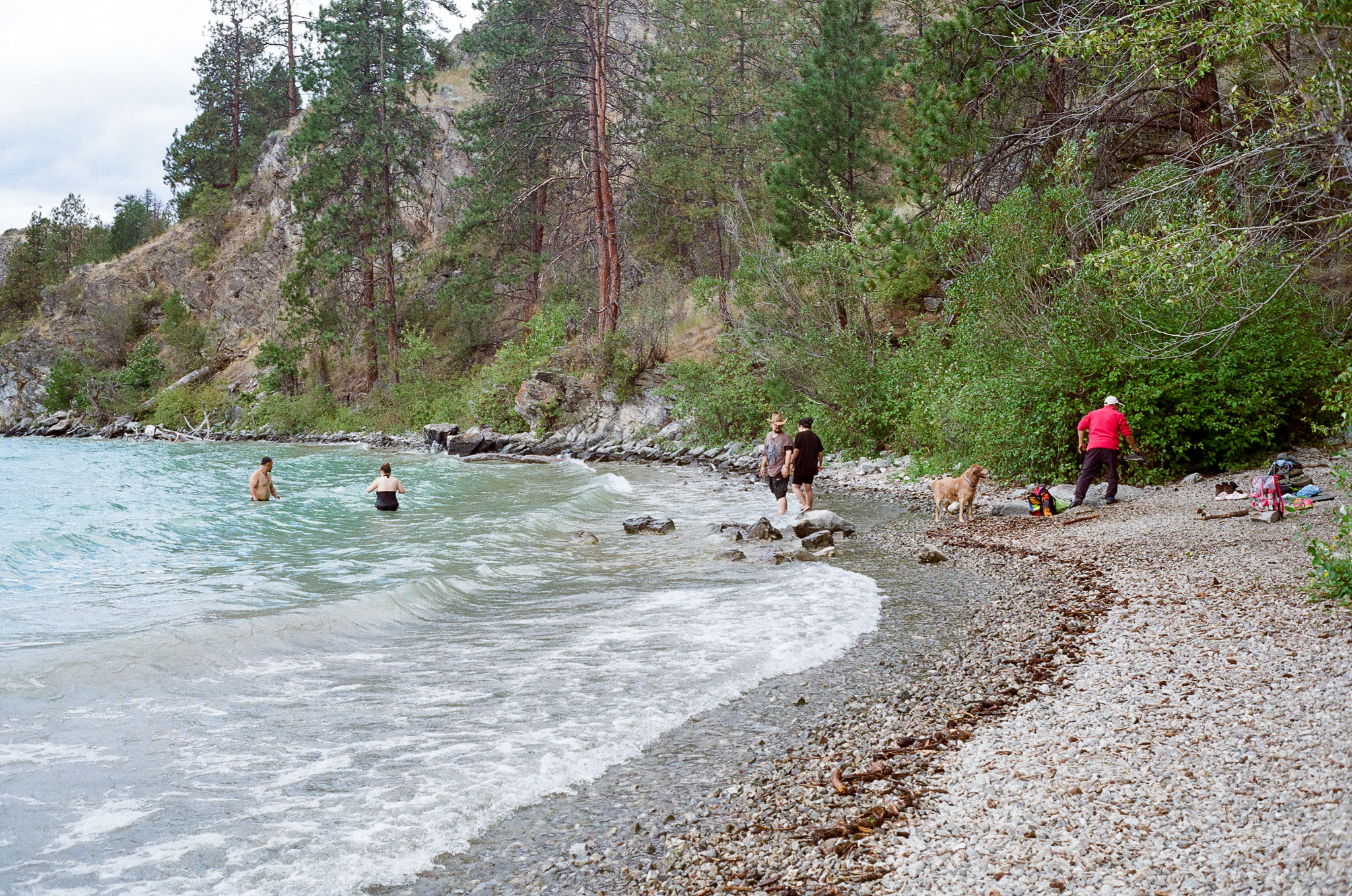
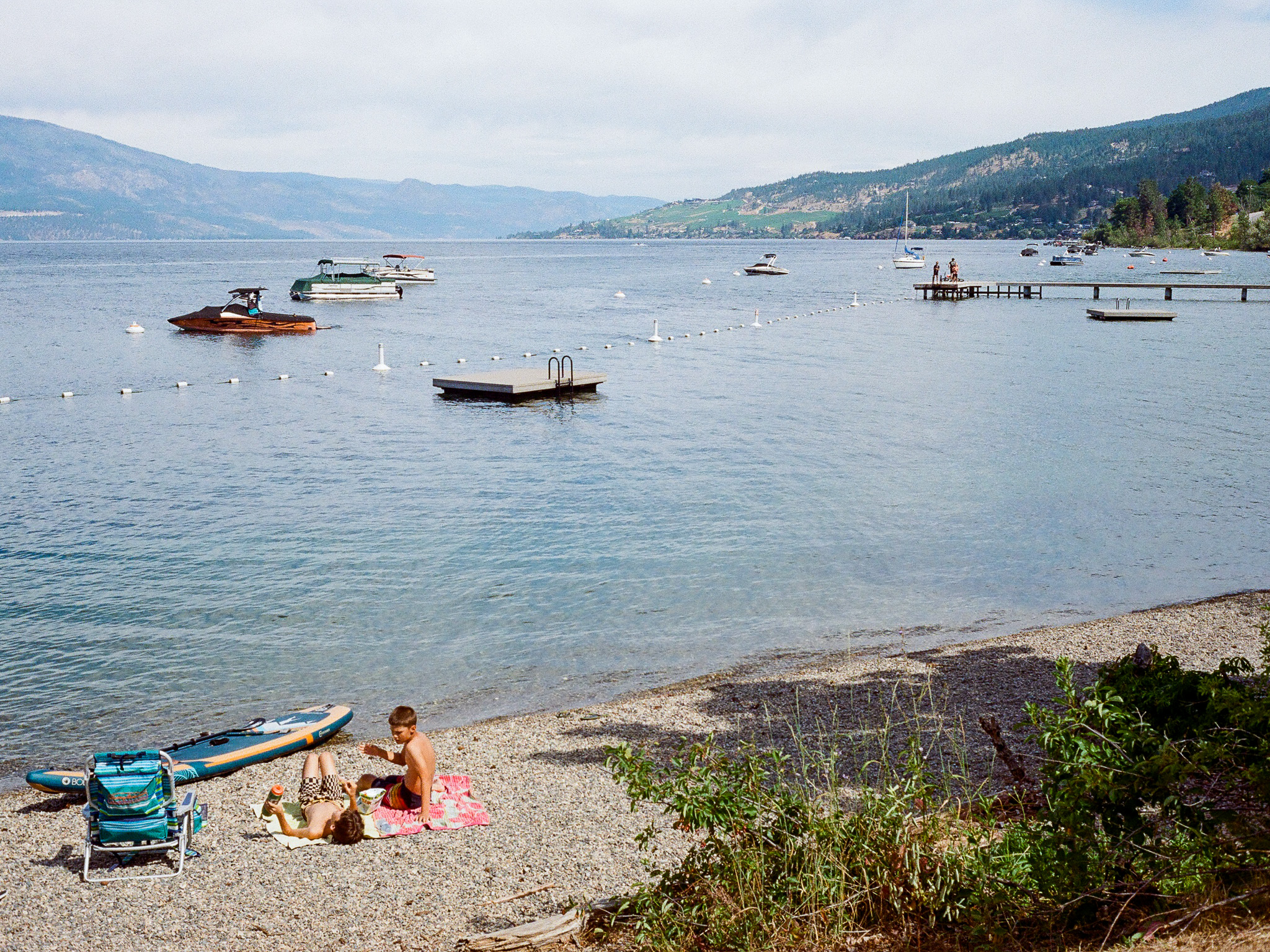
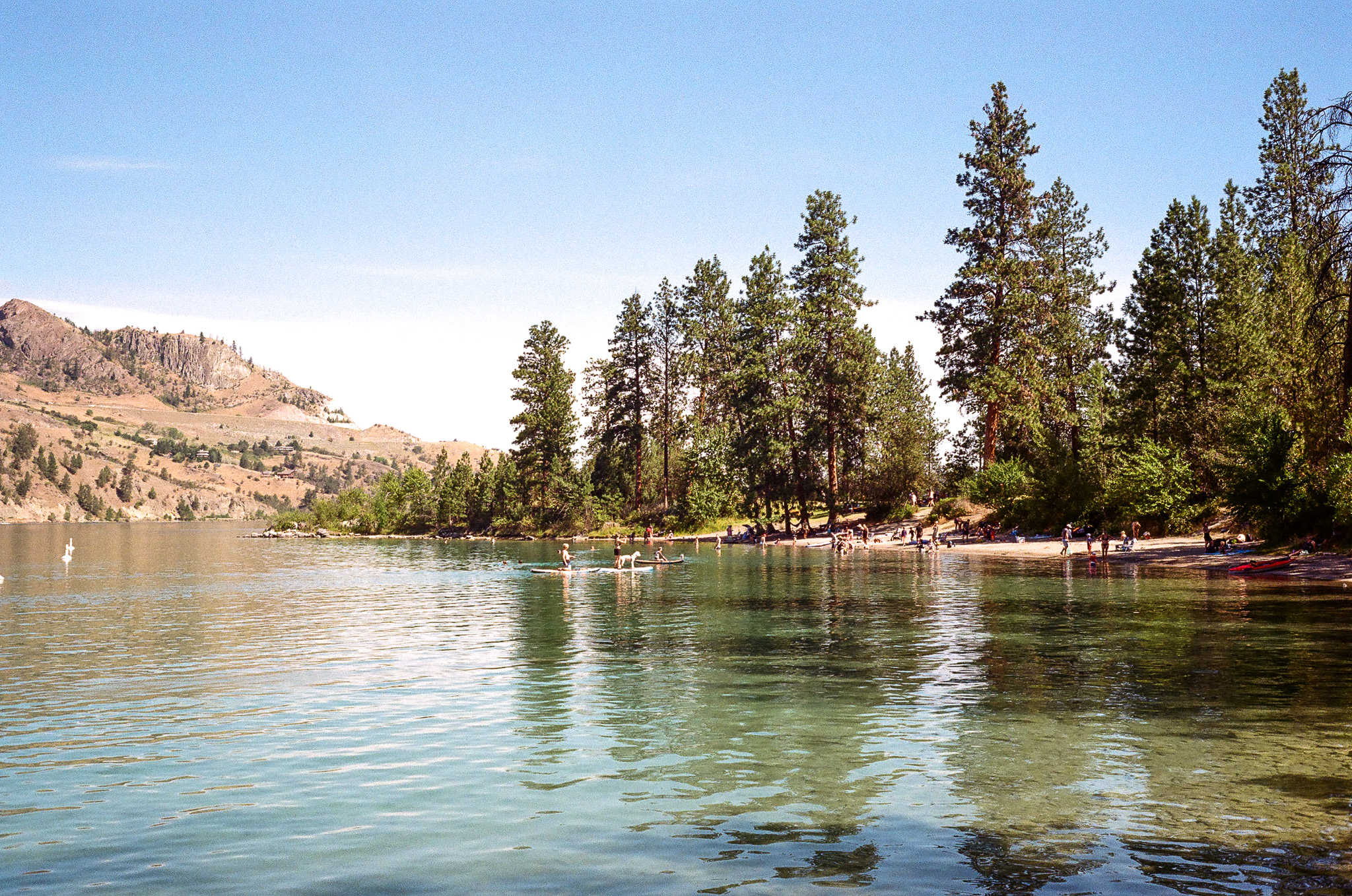
I handed the 36 exposure canister in to London Drugs Photo Lab with instructions to process and scan. A week later I had the pleasure of revisiting hazy summer memories – and it was indeed a great summer, with much of it spent outdoors.
I’ve been a serious photographer for 50 years, with some of that time spent as a professional. I used film for the first 30 years before whole-heartedly embracing digital. The reasons for change were cost and freedom from processing labs where quality came at a high cost.
In fact, a few years ago when London Drugs (the only notable camera retailer and processing lab in my part of part of the world) ran a film promotion I thought they were insane! I couldn’t understand why anyone would go back to using film when digital was the norm.
But just over a year ago I started experimenting with vintage lenses on digital camera bodies. I quickly discovered that some of these old lenses were actually very, very good. So good, in fact, that I started hunting them down in thrift stores, Ebay and Marketplace. So I now have lenses which I can use on my digital Leica SL2S with an adapter. They are fully manual without any electronic connection to the camera, so I now have to slow down when I’m working which isn’t a bad thing – especially as I shoot mainly landscapes and nature.
The next thing I found myself doing was buying old, mechanical film bodies which originally worked with these lenses. Some of these bodies require a little TLC as they haven’t been used for years. I’m good with mechanical things so I started opening them up to fix minor issues and I now have several good, working examples of the Konica Autoreflex range so I wanted to run some film through them.
This is where it gets interesting. I’m back to the fundamentals of photography and I love the slower, deliberate approach to capturing an image. I’m no longer a slave to complex camera menus and a plethora of buttons and dials. Once the film speed is set of the camera I just need to meter the light, set the aperture and shutter speed, then focus and press the shutter release.
For my genre of photography this is just fine – I don’t need lightning fast autofocus for sports or action, and I don’t need 10 frames per second either. If I did, I would be back to digital.
So, I still have to buy film and then pay for processing. The big thing that has changed in the last 20 years is that my processed film can be immediately scanned before dust and scratches degrade the negatives and I can use those scans in my normal digital workflow. I still archive the negatives but I’m not sure I will ever need them again.
Although I can make digitally captured images look somewhat like film in Adobe Lightroom, film has interesting ways of rendering colour, and film grain gives a distinct texture to the image. I actually really like the look! And there are still a lot of film choices out there – each with its own distinct palate – so it’s a case of finding the one which best suits your needs.
Finally, for someone thinking of getting into photography, I would encourage starting with film, where you can really learn the fundamentals. Sure, film and processing is expensive, but if you factor in the depreciation of modern digital cameras and lenses you may still be well ahead. Remember too, we learn best through our mistakes, and paying $1 per shot will quickly focus the mind! A working 35mm film body and lens will typically cost under $200 and in the right hands, is capable of amazing image quality. Of course, content and composition are ultimately the magic ingredients that give photographs meaning and that’s a topic in itself. So why not give film a try?
Are we waking up to the reality that the energy savings from government mandated LED lights are insignificant compared to the health catastrophe they are creating?
As a photographer I love natural and incandescent light over LED light. Certainly LED lighting is efficient but it lacks the full spectrum life on Earth has evolved with, and to me, it just doesn’t look or feel good.
On the domestic front, every winter I swap out our energy efficient LED bulbs for incandescents. Why would I do that? It’s because the quality of light just looks and feels better! Incandescents are supposedly ‘inefficient’ because they emit ‘wasteful’ infrared red light. But incandescent light feels good compared to LED because incandescent is rich in infrared; ultimately that’s why we are drawn to sit in front of stoves and fires on cold winter evenings. If you are a city dweller you are likely denied the right to do that because of the pollution created by burning wood or coal. Even when the winter sun pokes through the clouds, modern life keeps many of us indoors and under LED lighting, and unfortunately, government mandates are making it increasingly harder to find incandescent bulbs in stores.
When the push for LED began some years ago I asked a BC Hydro official why they would get the energy savings they thought they would when the ‘waste’ heat from incandescent bulbs added to the warmth of our homes during the winter months? Moving to LED meant that we would be cranking up the furnace to get the energy from elsewhere – be it gas or hydro. During the summer months we didn’t need our lighting much anyway. He went silent and then said he would need to give it some thought! By the way, I swap back to LEDs in the summer because incandescent bulbs now produce unnecessary heat which then has to be removed by energy hungry air conditioning.
Ten years ago I was stunned by the book “The Fourth Phase of Water” written by Gerald Pollack, head of the Water Lab at the University of Washington State. His work demonstrated, amongst other things, that water can be transformed into a highly energetic and structurally organized state, which is vital for the functioning of living cells. Where does the energy needed to transform water to this higher state come from? It comes from infrared light, and infrared light can penetrate deep within our bodies!
At the other end of the light spectrum we have ultraviolet light which is also essential for human health. We need it to synthesize vitamin D. It isn’t available from indoor lighting and only tanning bed lamps produce the ultraviolet that comes close to that found in sunlight.
We also know that diurnal shifts in the wavelengths of natural light have a profound and complex effect on our hormones. For example, blue light before bed can spoil our sleep. Indoor lighting and electronic devices don’t mimic the variations in natural light – something that may need to change in the future.
The sad reality is that modern life keeps a good proportion of us indoors and under artificial light. I’m convinced that the lack of full spectrum sunlight is a contributing factor in the health crisis our culture is facing. How significant this is compared to the barrage of toxins – both physical and psychological – we are assaulted with daily, we don’t yet know. What I do know is that it feels good to be out in the sun and I will be outside as much as I can!
For an in-depth look at this issue and possible solutions, I recommend the MedCram video in the link below.
While some of us may take photographs for our own satisfaction, most of us love to share how we view our world. With that in mind I stepped out and put my favourite North Okanagan images into a book.
It’s called Seasons in the North Okanagan and it will be available in local stores soon. There are sixty pages of captioned images, showcasing the best our region has to offer, at all times of the year. It’s a small format (8.25” x 5.25”) and soft covered, making it an ideal gift to put in an envelope and send to friends and relatives, or for visitors to take home as a memento of the area. For residents, it captures a twenty year window of development and growth, as well as the largely unchanged natural world around us.
Some of the images were taken from aircraft, some on hikes in local parks, and others at events when I worked for local media. I will update on price and availability soon.