Unknown's avatar

About David Skelhon

David is an accomplished writer, photographer, pilot, sailor and boat builder. He enjoys teaching others these skills and encourages thinking outside "the box".

A Life Changing Odyssey

2cac9d6d5b3309f676fe655baa5b58543ad6525a-thumbThirty years ago I quit my job in science and engineering. Even in my late 20’s I was tired and disgruntled with the world and my place in it. I wanted to get off the treadmill, and experience the beauty of Planet Earth, or at least my little corner of it.

With my partner at that time, Jill Brown, we looked to the world of sailing for travel and adventure. We sold our home, built a small Polynesian-style catamaran and moved to the ocean. We struggled to make a living in Cornwall, one of the most beautiful counties in the British Isles. I built boats and wrote books and magazine articles. It took a few years but the dream eventually became reality and culminated in an extraordinary voyage around the west coast of Britain in the summer of 1990.

Suilven’s Travels: A Life Changing Celtic Odyssey is my account of this 3 month cruise which was packed with adventure and challenge. Suilven II departed Plymouth in July and headed to the Hebrides, stopping in Scilly, Wales, the Isle of Man and Northern Ireland. The story brings to life the landscape and culture of western Britain and in particular Scotland’s Inner Hebrides. It also shows what is possible on a minimal budget if the desire to succeed is strong enough. I was alone for most of the outbound trip, giving me plenty of time to reflect on the world and my place in it. Jill Brown was with me on the demanding return trip when we struggled against gales and rough seas and came close to losing our small boat on a couple of occasions.

Looking back nearly 25 years it’s obvious there has been dramatic change in our world – especially in technology. But the human spirit and the search for meaning in life is growing stronger as more of us realize it is becoming impossible to thrive in a system which essentially alienates us from our Earth, and our true selves. Suilven’s Travels was written to inspire others to step outside the box and live closer to the Earth. It is available for $3.99 as an eBook on Amazon, Smashwords and many other outlets.
Calling CQ

I have been an amateur radio operator for many years and of all my interests, this one is the hardest to fathom. Why in an age of instant global communication would anyone want to play around with good old fashioned and not too reliable radio? “Ham” radio, as it is widely known, undoubtedly has many facets and technical challenges but I’m also discovering it satisfies a deeper need.

I’m almost obsessive about it. I’m either fixing up 30-year-old radios or building antennas from scrap or plumbing supplies from the local hardware store. With the exception of a Chinese handheld VHF radio I have never bought anything new. Some enthusiasts spend thousands on radios but unless you have a good antenna you’re wasting your time.

With this in mind, my latest antenna project grew out of 100’ of chicken wire and scrap aluminum tubing from my decommissioned swimming pool. In fact, the whole contraption sits over what used to be the pool. The structure is anchored by a huge electrical insulator and rises to a giddy vertical 45’. Thankfully it is slim and tidy enough to be barely visible to neighbours. After several weeks of head scratching and tinkering it now works like a charm.

Living in a relatively sparsely populated corner of North America, I find it difficult to be heard above my southern neighbours. Like the vehicles they drive, their stations tend to be rather large and consume huge amounts of energy. When an exotic call wafts in from another continent, a chorus of replies reverberates through the aether shaking the planet to its very core as one station tries to outgun another. I don’t have an amplifier and put out no more power than it takes to run a light bulb so my chances of being heard are very, very slim.

For instance, the other evening I heard a Spanish station calling CQ – the term is a hang over from the days of Morse Code that is an invitation for a response. Before I could even pick up the microphone “Carlos” was being pounced on. The exchanges are so predictable. “Fine business Carlos!  Great signal into Kansas my good friend!” A typical exchange lasts about 30 seconds, a new call sign gets added to a log book and they’re off to find another victim.

So I’m learning to poke around the short-wave bands and sniff-out the weaker, interesting stuff that get’s passed over by the big guns. I twirled the tuning dial and came across a quiet spot in the band. Through the gentle hiss came a faint voice. “CQ, CQ, CQ, this is Golf Three Oscar Mike Golf pedestrian mobile.”

“Pedestrian mobile from the UK? Wow!

I called him and to my surprise he immediately answered.  After the obligatory exchange of names and signal reports I ask, “So where the hell are you?”

“Actually I’m on Blackpool Beach and I’m running fifty watts from my backpack rig into a fifteen foot whip antenna.”

“Wow that’s incredible…and what’s the weather doing?”

“Oh it’s cold and just starting to rain.”

I smiled to myself; as much as I still love my homeland I’m glad I’m in the sunny BC Okanagan. This is really awesome I thought, we’re five-thousand miles apart and we are talking with a few hundred dollars of electronics and in my case, repurposed swimming pool hardware.

After a few minutes we end our chat and I wish him “Seven three and good DX” and really hope he makes lots more contacts.

One thing I am learning in life is that the loudest voices often have little of interest to say. It also dawned on me that my obsession with antennas and radio has a deeper meaning. Maybe it is a reflection of a desire not only to communicate my humanity to others but also to listen for that most important voice of all – the small quiet one within. Like the short wave bands, there’s so much noise in my head that I need to find a quiet spot and just listen.

Baya Exotica

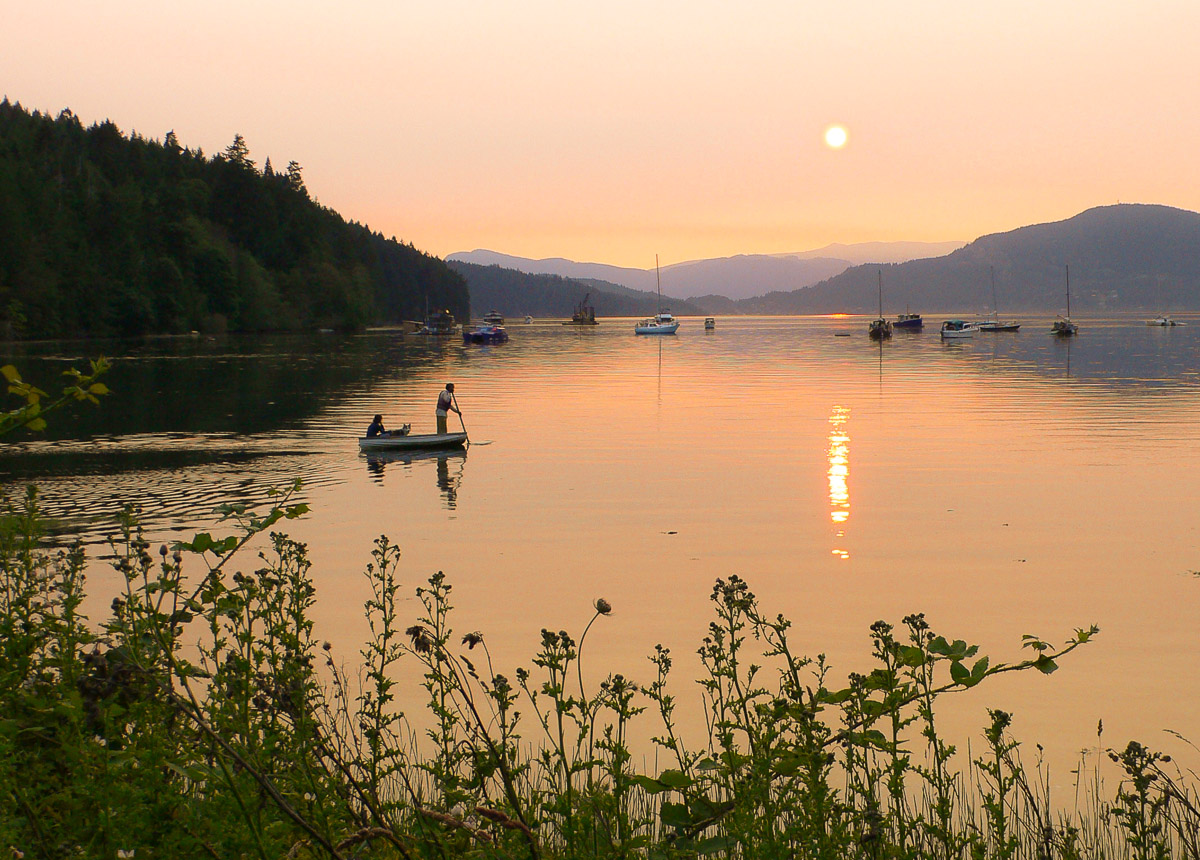
Sunset in Baya Exotica.

The grey haired man approaching with the wheelbarrow smiled and said, “Hi.” We were on a secluded forest trail and a wheelbarrow didn’t seem too out of place, even though it contained what I believed to be a guitar in a black case. After all, this was Baya Exotica. I turned a few seconds after we passed and looked back. He strode purposefully across the planks that spanned a small creek, his tall body flickered in the sunlight permeating the lush spring foliage. Suddenly he veered off the path and descended a steep dirt track down to the rocky foreshore.

An hour later, as the Vancouver Island’s mountains cast their long shadows deep into the bay, I heard a lonesome melody wafting on the breeze accompanied by a guitar. Not unusual I mused. Only last night I had been entertained by a djembe beating out a jungle rhythm. It appeared to be coming from a group ashore huddled around a fire. And earlier today I was shaken by wild buglings, eerily bounced around by mighty cliffs surrounding the bay, that seemed to come from nowhere. Who are these wonderful people? Where do they come from? Thank goodness there are still some left!

Here in Baya Exotica it didn’t seem to matter that Rainbird was surrounded by a collection of decaying vessels, some already half sunk and one in particular a hazard to navigation. Others were works in progress, or more appropriately, works in regress. With boats, as with other material things in life, entropy always wins.

I had felt the need to be back on the water. This time I was alone except for Maio my faithful Portuguese Water Dog. First Mate, Juliana, departed this world last December. She had fought many battles in her life but she was never going to beat the cancer that invaded her body.

Rainbird was as much her boat as mine and I wondered how I would fare. Would the memories held in her cedar hull be too painful to endure? I’ll admit to being fearful a few days earlier, when I untied Rainbird from her dock and headed out into the brisk southeasterly breeze. But the wind and the sunshine soon worked their magic and quickly settled my mind.

I was heading for Baya Exotica. I love its eccentric charm and always marvel at the surrounding hills and forest, which hold lush hay meadows. With unseasonal spring warmth and sunshine, everything was bursting into life. Birdsong permeated the air. Eagles and ospreys soared and swooped. Seals went leisurely about their business.

I was crossing a meadow with Maio; no houses, no people, no noise. We stood in the brilliant sunshine, feeling fully part of our surroundings. I had to remind myself that it really doesn’t get better than this.

Juliana’s vision and determination to get back in touch with nature led her to Rainbird. She has now gone, but for me, Rainbird is helping me do what Juliana had wanted for us both.

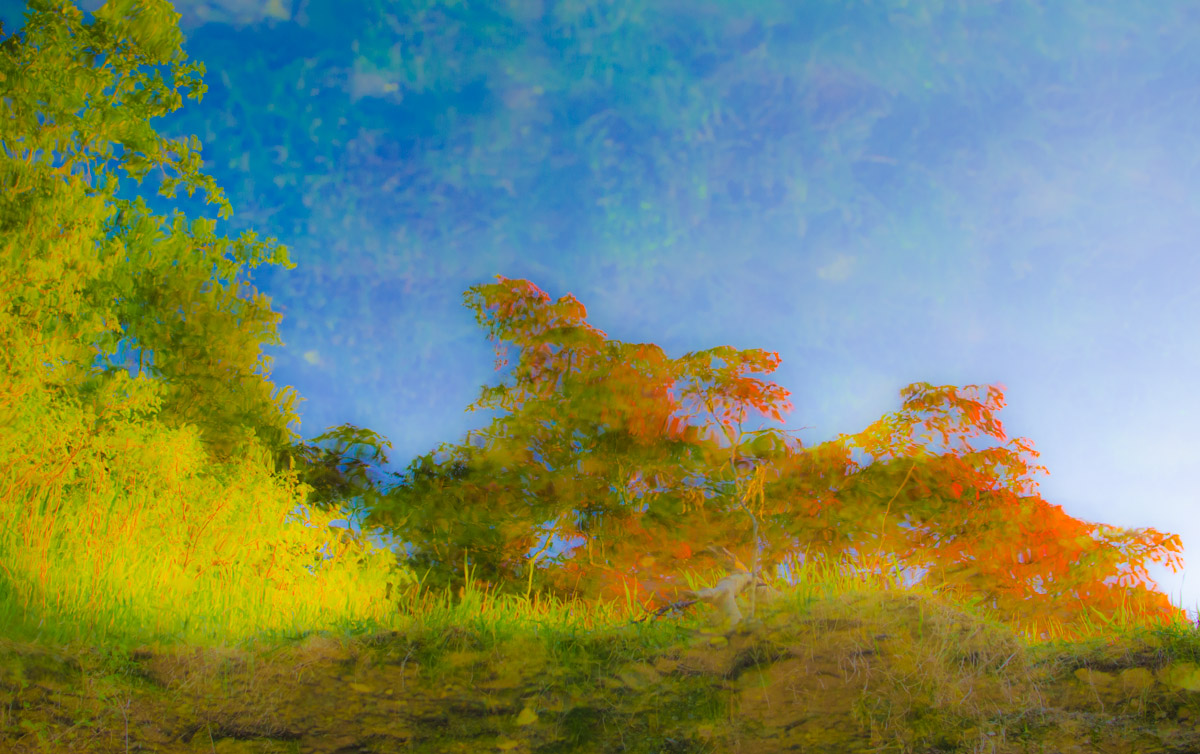
Wild as this image may seem, it actually originated as a reflection in a creek. The "sky" is the creek bed viewed through flowing water. The image was flipped horizontally and the colour enhanced. Taken on location in Baya Exotica.

Wild as this image may seem, it actually originated as a reflection in a creek. The “sky” is the creek bed viewed through flowing water. The image was flipped horizontally and the colour enhanced. Taken on location in Baya Exotica.

New For 2013

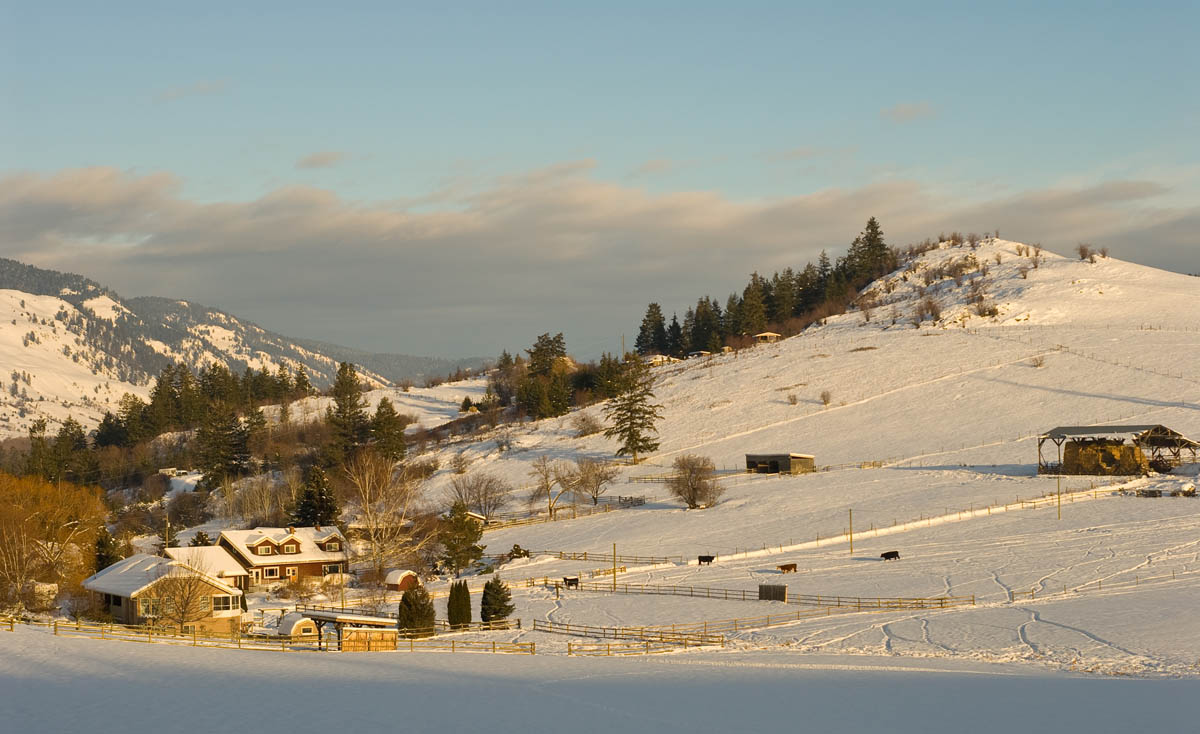
This is part of Coldstream, my rural community in the BC Okanagan. I took this photograph this afternoon while returning from a couple of hours of invigorating snow shoeing in -10C!

This is part of Coldstream, my rural community in the BC Okanagan. I took this photograph this afternoon while returning from a couple of hours of invigorating snow shoeing in -10C!

Thank you for all your support in 2012!

As we head into 2013 I’m making a few changes.

I have moved my photographic site to Zenfolio as they have some great features at very competitive rates. My photographic blog can also be found on the Zenfolio site, while Above and Beyond will remain the same, covering my journalistic material.

Over the past few weeks I have taken on the Canadian winter with my camera to reveal the seasonal beauty of the Okanagan Valley. You can view the spectacular results here.

For those of you interested in wooden boats and sailing, Pacific Wooden Boats is my nautical, simple living blog.

With three blogs, a book in the works, and a substantial photography site I’m looking forward to a busy year!

Wishing you all a happy and peaceful 2013.

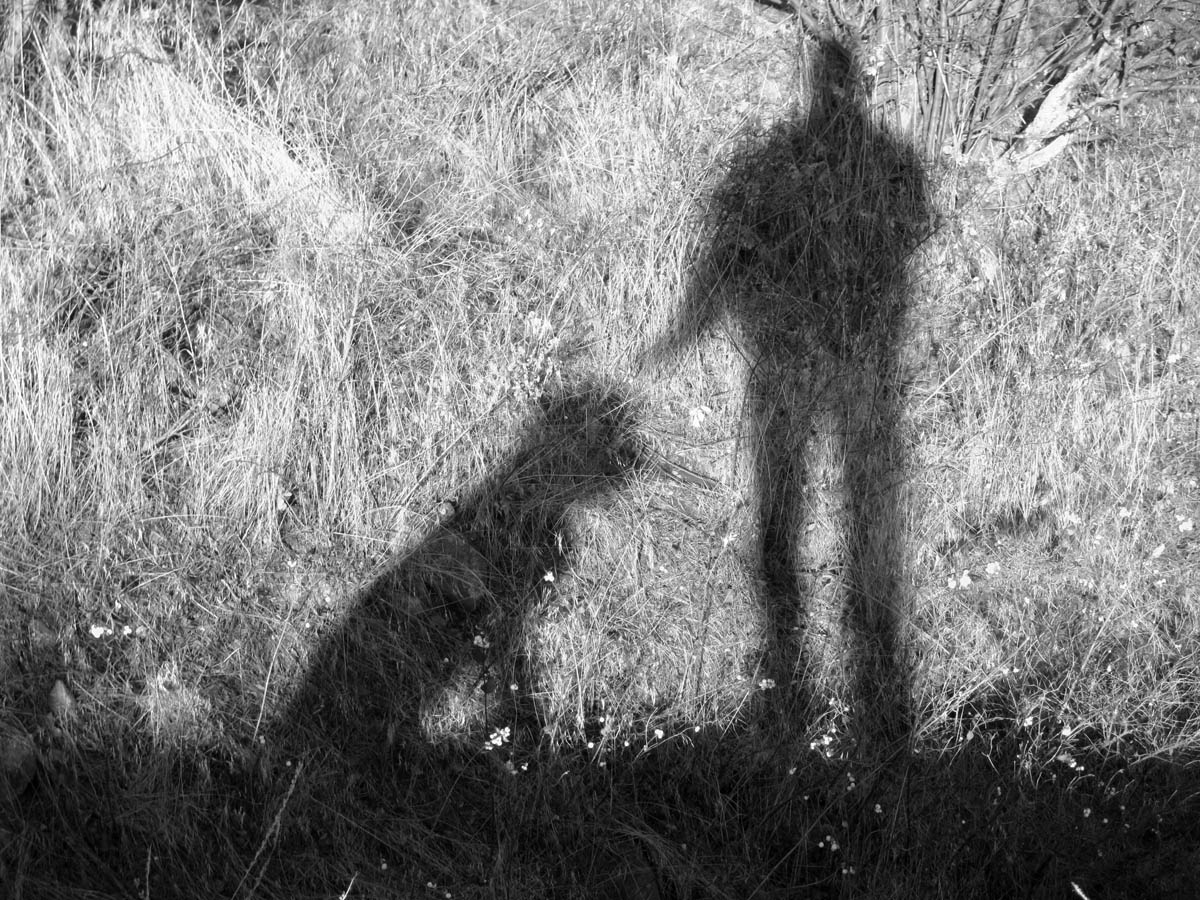
Me and my Portuguese Water Dog, Maio

Me and my Portuguese Water Dog, Maio out for our daily walk.

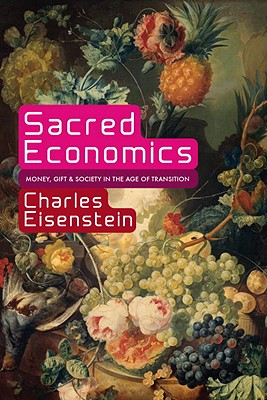
Charles Eisenstein’s Sacred Economics – A Book You Cannot Afford To Ignore

Review by David Skelhon

Every now and then, a really trans-formative book comes along – one that challenges beliefs and opens readers to new ideas. Sacred Economics by Charles Eisenstein is one of those books.

Charles Eisenstein explains that we are experiencing the death throws of an economic system that has brought us some great benefits but at terrible cost. Many of us have been born into this system and know no other. We have been taught a story about money which we have unconsciously internalised without questioning its ethics or consequences.

One result of adopting this story is the need for endless growth originating from a money system that is based on debt and interest. It is a system that breeds artificial scarcity, because to put it simply, there is never enough money in the system to repay the interest on the cumulative debt.

It is a system that can only seem to work if there is economic growth and that ultimately entails the conversion of more and more “gifts” from the Earth – the sacred commonwealth of all humans and indeed all life – into private and corporate ownership for profit. When growth slows, the system collapses, because all the debt can never be repaid – there is never enough money in the system to allow for that, so there will always be losers. It also leads to a “more for you is less for me” culture.

Eisenstein also talks about the innate and insatiable human tendency to hoard money, rather than allow it to flow freely. This is being brought sharply into focus as the divide between rich and poor deepens and the ultimate outcome is exploitation, environmental degradation, war and human misery. He postulates what would happen if we went to a system of zero or negative interest. This actually is not a new concept and has sound roots in history and other cultures, and may form part of the solution.

The author makes it clear that he does not think that money is the root of all evil, rather the problem is in the way we have chosen to use it – the story we have taught ourselves – that is responsible for the misery we are creating. Money plays a vital and necessary role in the complex human interactions of the modern world but he believes we need to change that story.

Certainly, conspiracy theorists my be disappointed by this book because Eisenstein – whilst he acknowledges that they may have some basis and bad things do happen out there – realises that much good energy can be wasted pursuing them. Rather, he encourages the reader to look at things that can be done at the local level to facilitate a return to a kinder, more gift based system where the sacred gifts of the Earth – our birthrights – are respected.

The author is under no illusion that these changes are going to happen overnight, and there possibly will be years of pain before we put our house in order, but the real magic of the book is that it leaves the reader with the impression that these changes must and will happen. Indeed, the process is already underway and ultimately our very survival depends on it.

Sacred Economics is not a cold, factual, academic work – it is non-the-less well researched and referenced. Its real power comes from Eisenstein’s from-the-heart honesty. I found that it resonated with me and more importantly, challenged me at the same time, exposing long held beliefs about money and wealth that I discovered I could well do without. Its twenty-four chapters are not light reading but I consider the concepts so important that I have no doubt I will be dipping back into it again and again.

I will leave the last words to Eisenstein; “A primary goal of this book is to align the logic of the mind with the knowing of the heart: to illuminate not only what is possible but how to get there.”

The book is available in paperback or as an eBook  In keeping with the author’s philosophy, it can also be read on-line for free. http://charleseisenstein.net/